Showing posts with label IanThomas. Show all posts

Sunday, December 11, 2016

Nintendo Nostalgia Pt. 2

I left off with my purchase of the beloved silver Nintendo DS Lite, which was not only cool for its wireless connection for multiplayer, but it had a touchscreen! How cool is that? This was obviously pre-iPhone, and the touchscreen was pressure based, not capacitive, like today's touchscreens. But for that time, this was one of the coolest aspects. I don't remember what I first played on the DS, but some of my favorites were Kirby Super Star Ultra, Drawn to Life, and later, Sid Meyer's Civilization Revolution.
Image result for civilization revolution
Civ Rev was a significant step in my video gaming career because it was one of the first strategic world simulating games I ever put a large amount of time into. I had achieved a new level of gaming, a more serious game with more thinking involved than the typical platform games of my past.

Moving on now from the DS and finishing off the Nintendo saga, enter: the Nintendo Wii. Nearly every household with children had a Wii at some point, probably a Christmas gift, that's where my family got ours, a Christmas gift from Santa a couple years after the console's release. The Wii had huge appeal to families for many reasons; great marketing, family interaction, physical movement, family-friendly game selection (Nintendo has for a long time had a market on having almost exclusively family friendly games), reasonable price, high tech appearance. The list goes on, but the bottom line here is that between the years of 2006 and 2009, Christmas morning included swinging Wii remotes around hitting virtual tennis balls for an enormous percentage of US families, including my own.
Image result for nintendo wii

Nintendo Nostalgia Pt. 1

I didn't play much video games as a kid, but I started out on an old Gameboy Pocket which was a Christmas gift from my older brother, Eliot. That passed down Gameboy was a huge hit with me. My brother included some classics like Tetris, Super Mario Land, Star Wars, Sweep the Alleyway, and Wave Runner, among a couple of others. These were my introduction to gaming. Image result for Gameboy pocket
Image result for gameboy pocket


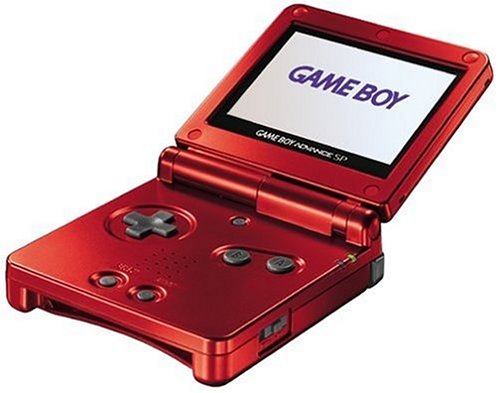
I eventually graduated to a red Gameboy Advance SP, probably one of the biggest birthday gifts I ever received from my parents in terms of excitement. The first game for the Gameboy Advance was Mario Party Advance; I put a good amount of hours into that game. My favorites, however, were Kirby Nightmare in Dreamland, and Lego Star Wars. Those gave me some good times.

Image result for gameboy sp
My third gaming system was a silver Nintendo DS Lite. This was huge for me! The DS was, if not the first, one of the first, large purchases I had ever made with my own money. On top of that, I got a cool silver one, which none of my friends had and I had never seen before. Mario Cart was a pretty big hit on the DS because you could play multiplayer races with your friends over wireless connection, and you didn't even have to own the game to do it! I didn't ever own the game, but as long as one person did, we could all race together.

Image result for nintendo ds lite silver


Superstore

My roommate and I have been watching an NBC show on Hulu called Superstore. The show focuses on the goings-on of a big box store like Wal-Mart or Target. Like most good storytelling, the real meat of the show is not in the situations the characters get themselves into but the characters themselves. Moving through the two seasons that have been produced so far, we see the characters change over time as result of the situations they find themselves in, but more so one another.

Image result for superstore

I would describe this show as a cross between The Office and 30 Rock, also both NBC programs; in this way, the show feels familiar. However, it does not feel like watching the same show. It is a new twist on the previous NBC comedies. Most notably, I notice the way in which Superstore brings more realism into the story; things don't always work out like they do on TV. For example, in The Office, Jim and Pam finally end up together, and the road to that point isn't perfect, but they get there eventually. The two main characters (arguably paralleling Jim and Pam) in Superstore are Jonah and Amy, who seems as though they will quickly become a pair for the show. However, at the end of the first episode, the viewer learns that Amy is married, and even with the issues arising in Amy's marriage by the end of the second season, I wouldn't be surprised if Amy and Jonah do not end up together in the end, I think this show has the potential not to go for the feel-good Jim and Pam resolution, because life isn't always feel good, even if it sometimes is.

Monday, December 5, 2016

Analog Media Arts

This weekend, my roommate and I drove about an hour and fifteen minutes up to a country road near La Grange, Indiana. We stopped at an old house with a 1960's Alice Chambers combine sitting to one side of a large open garage; we got out and said hello to JR. Through the sixty or so years JR has spent on this earth (the majority of which in Indiana) he's done many different things, including installing those huge rubber seals you see at semi bays. That Saturday, however, he was selling us 700+ vinyl records and 300+ cassette tapes for $100.

I found the lot on Craigslist listed for $120 and figured my roommate and I could make some extra money reselling them, since neither of us has jobs. I Emailed JR and found out the collection had belonged to a former DJ who had been renting a property from him and was evicted. I asked JR if he would settle for $100; he said yes and gave me his address, and I told him I'd see him at 11:00 on Saturday.


700 records is a large amount of records, combined with the 500 or so cassettes, they take up a lot of space in our dorm room. I'm not a collector of records myself, but I know a lot of people really enjoy them, my father has a pretty extensive collection leftover from when vinyl was just what you bought to listen to music. In an age when digital media prevails, there's something kind of magical about the analog nature of things like vinyl and cassette. I don't get as excited about them as some, but I can certainly appreciate the connection created between the art and the listener when placing the needle on the edge of the inky black vinyl.

In related news, if you're interested, I'm selling records.

Sunday, December 4, 2016

Multi Facial

In 1994, Vin Diesel,of Fast and Furious fame, wrote, directed, produced, and starred in a short film called Multi Facial. The twenty-minute film follows Vin Diesel's character, Mike, through several acting auditions in which Mike portrays a slew of different ethnicities.


Diesel highlights the frustration of being "racially ambiguous" in the acting industry. Not totally white. Definitely some Italian. Could pass as Latino. Too light to really be black. Despite Mike's well-performed audition pieces, he isn't cast for the roles because he doesn't quite fit the bill.

Multi Facial gave Diesel the chance to create a full feature film called Strays which he also wrote, directed, and produced. Strays would ultimately push Steven Spielberg, having already been impressed with Multi Facial, to cast Diesel in Saving Private Ryan, effectively launching the rest of his acting career.

The film exhibit's Vin Diesel's excellent range and performance as an actor in a way I did not expect. I was not familiar with Diesel until watching this film and doing some reading, but I knew he had starred as a tough guy in the Fast and Furious franchise. I'm thoroughly impressed by every aspect of this film, and it gave me a new perspective into a world about which I know little.


Saturday, December 3, 2016

South Park and S***

I was intrigued to watch the first episode of South Park's fifth season by this video discussing language and censorship in the TV show.


I don't usually watch South Park, but I've seen a few episodes and I think it's an alright show. I was interested in some of the points made in the above video regarding the evolution of content on the show. The video highlights the show's progression to more and more vulgar content over time, as social taboos lessened over time. The trend of greater social acceptance of vulgarity has over time been pushed along by shows like South Park, which stretch boundaries and cross the occasional line.

One important note which can be taken from the video by consumers is that the FCC cannot regulate subscription based content. Content is instead regulated by the networks airing shows themselves in order to be more appealing to advertisers, because traditionally, advertisers favor family-friendly content.

Season five, episode one, "It Hits the Fan," surrounds the controversy over the word "shit" being used for the first time in a television show (within the South Park Universe). A ticker appears at the first utterance of the word and the episode concludes having tallied a total number of 162 uncensored usages of the word or a variation of it. The conclusion at which the characters arrive is that the word loses its taboo nature when it is used excessively.

The application is obvious, many of us have been desensitized to some curse words, so perhaps to some, censorship has positive benefits. In the end, however, it isn't objectively bad to curse, even though it may be taboo to curse in excess. Censorship, as stated in the video, can't protect us from curse words, only sensitize or desensitize us.


Friday, December 2, 2016

Video Games as An Escape Pt. 2

This is in continuation from my previous post on the same topic.

I have certainly used video games as an escape, and sometimes it is the perfect release; a brief separation from "real life." Sometimes, it's too much of an escape. I tend to get sucked into games significantly and lose time and productivity to the "separate world" in which I'm playing. I've trained myself to identify what kinds of games I ought to avoid in order not to get addicted and lose productivity, but it still happens from time to time.

One reason escaping to video games can be so addicting and dangerous is that video games give a sense of accomplishment, some would call it a false sense of accomplishment, but I think there is something to be said about the realness of such achievements. Such achievments can be fantastic, but the danger lies in getting sucked in. When you've become hopped up on building a castle in Minecraft or completing missions in Fallout, it can be a disappointment not to see those accomplishments reflected in your real life. It can give a sense of emptiness to "real life" because you've put so much time and effort toward this other world but you don't live in this other world, so it can be a shock psychologically to emerge from the game and find that nothing has changed.

In measured quantities, however, video games can provide an escape without becoming life-sucking-worlds of false achievement.

Related image

Thursday, December 1, 2016

Video Games as An Escape

I’m very happy to have a car on campus because it seems best that I get off campus at least once a week to keep from going crazy. Going out and exploring, doing things, is my primary escape. I was talking to my roommate a few weeks ago and joking about  how he must be stronger than I am not to have that escape anytime he needs it. Although, I thought about it and realized that he has an escape too, it’s just a little different than mine.

While I escape to a geographically different place, my roommate uses video games as his liberation from the daily grind and escapes to a different place mentally. I don't think either of these are better than the other, it's about whatever works best for each individual.
The fact the video games can offer that escape is pretty cool. Part of the reason this is possible is because the accomplishments achieved in a game can activate the same rewards system in the brain as other, real life accomplishments. This dopamine high can be rewarding and can offer players fulfillment, however, this effect can create problems when the line between real life and the game is made less distinct and the world to which one escapes becomes less of an escape and more of a part-time home.

In my next post, I will further explore the possible dangers of video games as an escape.
Image result for last of us gameplay

Wednesday, November 30, 2016

My Conviction: A Look at Macklemore's "White Priviledge II"

I'll begin with a bit of a goof as an icebreaker to this more serious topic. (Which is in continuation from previous posts here and here).


Macklemore is often seen as a lesser artist in parts of the Hip Hop world, but a case can certainly be made for his artistry. Being a white guy from Seattle, Macklemore stands out in an industry dominated by black artists. He recognizes his outlier status is not without conviction.

"This is not my culture to begin with. As much as I have honed my craft, I do believe that I need to know my place" said Macklemore in a 2014 interview with Rolling Stone's Jason Newman.

In the song White Privilege II, Macklemore reflects on his role not only as a white artist but as a white person when it comes to issues of race in today's America.


Macklemore begins the track by recalling a time attending a Black Lives Matter March. He's not sure what his place is; he cares deeply about the issue, but is he in a position to be a part of the movement?

I want to take a stance 'cause we are not free
And then I thought about it, we are not "we"
Am I in the outside looking in, or am I in the inside looking out?
Is it my place to give my two cents?

He shifts gears to discuss the bastardization of Hip Hop culture by the music industry; no doubt questioning if what he's doing and what he's creating has any similarities to the hypocrisy he curses in the verse.

You've exploited and stolen the music, the moment
The magic, the passion, the fashion, you toy with
The culture was never yours to make better
You're Miley, you're Elvis, you're Iggy Azalea
Possibly the most convicting part of the song is the interlude featuring a skit wherein a mother approaches Macklemore in a coffee shop thanking him for the positive message in songs such as Same Love and Thrift Shop. She expresses her frustration with the negative messages in much of Hip Hop "like, all the guns and the drugs // The bitches and the hoes and the gangs and the thugs" Her frustration quickly turns toward the protest outside the coffee shop heard in the background of the track as a muted "Hands up, don't shoot!" over and over again.

"Even the protest outside, so sad, and so dumb
If a cop pulls you over, it's your fault if you run"

Macklemore is forced to consider his role in bringing Hip Hop to people with thoughts and opinions like the mother in the coffee shop. "America feels safe with my music in their systems" What has allowed him to become the voice of Hip Hop to the demographic of "white moms" and the like? "My success is the product of the same system that let off Darren Wilson, guilty" (I'll give you a hint, it's the title of the song).

In turn, what responsibility does he then have as the "white mom's" representative of Hip Hop? "So what the fuck has happened to my voice if I stay silent when black people are dying"

This song describes so many of the same feelings I feel as a white guy with conviction about the movement. What do I do? What do I say? These are not easy questions to answer, and the answers may vary based on who you ask, but it is important to keep asking those questions.

I've heard that silences are action and God knows that I've been passive
What if I actually read a article, actually had a dialogue
Actually looked at myself, actually got involved?
If I'm aware of my privilege and do nothing at all, I don't know

I don't know either, but hell if I'm going to stop trying to figure it out.


Wednesday, November 23, 2016

Context for Black Lives Matter

My previous post was about my feelings following the shootings of Alton Sterling and Philandro Castile by police officers this July while I was traveling with my friend Thulani. These events, coupled with Thulani's response (as a black man himself), left me unsure of what to do.

I am, in some ways, a concrete thinker, so analyzing facts and data can sometimes help in processing my emotions. The following video, from a YouTube creator whose principal topic is mathematics, helped me gain perspective on these two shootings and many more like them.


This video is by no means unbiased, but I think it does well in presenting these facts in a way that is not excessively hostile toward either side of the movement.

I knew about these events prior to watching the video, but it helped connect them in my mind. Making that connection is startling; putting all the events together makes it hard to ignore the trend.

The trend being:
"Black person shot by police"
"Largely unprovoked and uncalled for"
"Ruled a homicide"
"No indictments"

I have the concrete facts, and I can see the trend. I have the personal connection, and it provokes my emotion. I believe in the movement, but I'm still not sure about my part in it.

This video has a brief suggestion for white people. "Listen to black people. Talk to other white people." However, I think there's still more questions to answer, not to mention the question of whether a fellow white person is the best place to seek instruction on this matter.

Tuesday, November 22, 2016

What should I feel?


This summer, one of my best friends, Thulani, and I were given the opportunity to lead worship on a mission trip in New Orleans. We decided to make a road trip out of it. From Indianapolis, our stops included (among others) Louisville, Nashville and Atlanta. You can check out the videos Thulani made documenting each day of the trip here. It was a grand time.

While we were in Nashville on day two of the trip, July 5th, Alton Sterling was shot and killed while being held down by police in Baton Rouge, Louisiana.

The following day, July 6th, while we were en route to Atlanta, Philandro Castile was shot and killed in his car with his girlfriend and her four-year-old daughter after being pulled over by an officer in Falcon Springs, Minnesota.

Two police shootings of black men within two days. I had never seen Thulani, a black man himself, so disheartened.

These events took place hundreds of miles from the cities we were in, but the shock-wave which resulted was evident and crushing. Thulani was quiet that night; he was not his usual chipper self. We were both frustrated and upset, but he was fearful.

What could I do to comfort one of my closest friends when he felt less safe in this world solely because he is black? What could I say as we drove past red spray paint on buildings the following day pleading "JUSTICE FOR ALTON." What should I feel when I will never know the fear of being seen as a threat based on the color of my skin?

I don't know. I know I can be a friend to Thulani. Perhaps that's the best thing to do.

Wednesday, November 9, 2016

On Nights and Representation

I remember the night of May 3rd.

I remember exuberance.

I remember community.

I remember hope.


That night I was with a group of Bernie Sanders supporters in a bar in Indianapolis watching the results of the Indiana primary. We filled that bar. We were young and old; we were men and women of all races and religions. We had all been working for that moment. We called voters, canvassed the city, and even cobbled together a campaign headquarters in an old house in one of the city's cultural districts.

We became united through a movement and then became the movement. And we won. Exuberance. Community. Hope.

Last night was different.
___________________________________________________________

I remember the night of November 8th.

I remember anxiety.

I remember solemnity.

I remember fear.


 Donald Trump doesn't scare me. I believe he could be a half-decent manager of the United States. What scares me is that so many people saw the bigotry and alienation demonstrated by the President-elect and despite these things decided they were content with the idea of him representing themselves and their country.

Trump does not oppose people's beliefs; he opposes who they are. He hates that which one cannot change about themselves.

It was a hard world to wake up to this morning. Donald Trump, the human, was not the cause for the teardrops dampening my pillow this morning, it was knowing that so many found themselves content with having him be a symbol of their community and country.

This isn't about Trump, or Bernie, or Hillary. This is about ideas.

I'll leave you with this tweet from a high school classmate of mine.

Tuesday, November 8, 2016

Smart Design, Re: Geri's Game & Chip Kidd

If you read my post on corporate video you may have picked up on my love for smart design. One of my favorite lessons on design comes from a TED talk given by graphic designer Chip Kidd, well known for designing the book cover for Michael Crichton's Jurassic Park.

Watch this short clip from the presentation.

Chip Kidd, "Designing books is no laughing matter. OK, it is."
TED2012, March 2012

I was reminded of this ever-relevant idea of letting images speak for themselves just as much as text when reading Greg Singer's article about Pixar's storytelling.

"Their visual language captures the texture and cadence, the emotional core, of the story."

Pixar's animation is a far different medium from the graphic design Chip Kidd utilizes in his book covers, but they both strive to do the same thing: tell a story visually.

In much the same way Kidd allows his visual designs to speak for themselves, Pixar animators strive to use their medium not only to tell the story they were given by writers but enhance them.

Singer writes about how the storyboarding team decides what goes into the final cut and what doesn't

"There are a lot of great ideas and moments, but they can't all stay in the film if they are not serving the story. [...] A simple test is to turn down the sound when viewing the reels to see if you can still understand the flow of the story."

Pixar's short, Geri's Game, is a great example of the beautifully designed marriage of good storytelling and good animation.

Embedded below is Geri's Game with the sound removed. Per the method described in the above passage, let's explore the idea of the animation speaking for itself (without the assistance of sound).


While the film's absence of dialogue makes it easier to understand without audio, the takeaway here is that Pixar produces animated video that speaks for itself. That is smart design.


Saturday, November 5, 2016

The Moleskin

"As [Andrew] Stanton says, "Be wrong as fast as you can." Get your ideas onto the page. The real gold is mined later."
The Secret of Pixar Storytelling by Greg Singer

Most days, in my left front pocket, you can find this Moleskin notebook and pen.

I have terrible memory, so it helps me remember things that otherwise would never cross my mind again. It also serves as a place to put those random little thoughts that threaten to impede whatever it is I'm working on so that I can push those thoughts out ideas out of my mind and focus on the task at hand knowing that they will all be there in the notebook for later.

Sometimes, those little thoughts are "don't forget to email Andy," but other times those thoughts are ideas. These ideas can be anything from song lyrics to recipes to business ideas. The key is to write everything down, even if later, you look back at it and think, "that sucks" you're that much closer to an idea that you love.

I wholeheartedly agree with what Singer wrote in the passage above referring to Stanton's advice. Write everything down, all ideas benefit you, even bad ones. Getting the bad ideas out of the way makes more room in your head for the good ones.

Thursday, October 27, 2016

Corporate Video

On September 7, following their keynote, Apple published this video summarizing that day's presentation.
Apple has always had fantastic marketing, and their media team's skill is on prominent display in this video. The quick and flashy editing keeps the video short and fast-paced, which is essential in holding the audience's attention. The music is perfectly integrated with the video, as is the text, which gives the viewer sufficient information while still letting the graphics, which are beautiful, do their part.

Just yesterday, Microsoft published this video introducing their new product, the Surface Studio.

This video is a little different because it focuses on a single device. It also doesn't use any words - and it works. This video is a prime example of letting the product speak for itself; When visuals do such a great job of demonstrating, language based explanation isn't necessary, and probably redundant.

These videos aren't starting any ideological discussions and may be looked down upon as merely commercial by some creators of video that would perhaps say the films' creators sold out. However, the truth is, these are good videos, and artists need to make a living just like anybody else.

Thanks to the budgets of large corporations like Apple and Microsoft, they're able to spend a lot on creating high-quality videos like these. I'm glad they're doing it, if only because I enjoy watching them.

Saturday, October 22, 2016

Versatility of the Comic Strip: Part 5 - Calvin and Hobbes, Versatile Appeal

Because of the medium’s brevity, image-based storytelling, and its traditionally non-explicit content, the newspaper comic strip appeals greatly to children, but it is not, by any means, strictly children’s media.

Calvin and Hobbes

Friday, October 21, 2016

Versatility of the Comic Strip: Part 4 - Cleanliness

Because of the medium’s brevity, image-based storytelling, and its traditionally non-explicit content, the newspaper comic strip appeals greatly to children, but it is not, by any means, strictly children’s media.

Cleanliness

Thursday, October 20, 2016

Versatility of the Comic Strip: Part 3 - Illustration


Because of the medium’s brevity, image-based storytelling, and its traditionally non-explicit content, the newspaper comic strip appeals greatly to children, but it is not, by any means, strictly children’s media.

Illustration

Wednesday, October 19, 2016

Versatility of the Comic Strip: Part 2 - Brevity

Because of the medium’s brevity, image-based storytelling, and its traditionally non-explicit content, the newspaper comic strip appeals greatly to children, but it is not, by any means, strictly children’s media.

Brevity