Showing posts with label Sarah Bish. Show all posts

Friday, December 2, 2016

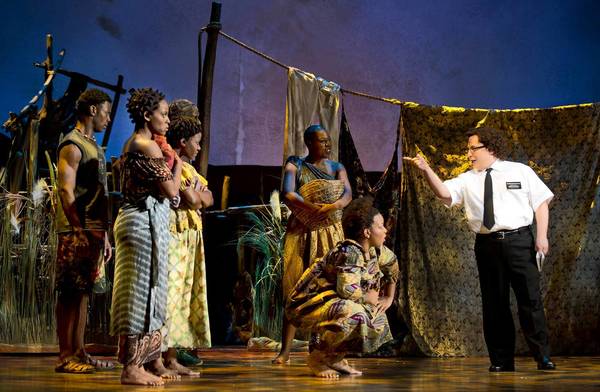
The Book of Mormon: Kind of Religious, But Not Really

This past spring, I visited my best friend from high school for this birthday, and we went to see the musical The Book of Mormon at a medium-sized civic theater near where we lived. I had never seen it before, and had only a vaguely general idea of the plot. However, as the story unfolded, I was absolutely blown away.


The plot of the musical revolves around Kevin Price, a nineteen year old Elder in the Mormon church, who desperately desires to be sent on his mission in Orlando, Florida. There he can enjoy the sun, Universal Studios, and last but not least, putt-putt golfing. Maybe he can even convert a few people along the way. However, Kevin is dumbfounded when he and his mission partner, Elder Arnold Cunningham, are sent to Uganda (oh boy, like Lion King!), to try to speak to the African tribes there about the Lord and the history of Mormonism. And, when the people of Uganda aren't receptive to Elder Price's words of Christian encouragement, he decides that he wasn't made for Uganda and will go back to America and ultimately to Orlando.


This musical is a strange combination of crude, yet moving, and I think that it possesses an important message for Christians: God doesn't make mistakes. In the song where Kevin has decided to return home, he cries out to God, saying: "God I'm sure you don't think I'm a flake, because you've clearly made a mistake." When Kevin tries to take God's plan into his own hands and leave his camp in Uganda, God redirects him right back to his camp, where he is supposed to be.


I know that I like to avoid blame, regardless of the cause, and that we as people like to avoid blame. However, not only should we take responsibility, but we really can't redirect that blame to God. He does what He does for a reason, and we shouldn't question it.

Raunchy? Quite. Offensive? Probably. Meaningful? Certainly. 

Monday, November 28, 2016

Into the Forest

Over Thanksgiving break, I watched the 2016 Canadian Indie film Into the Forest. Set in the mountainous region of Northern California, this film focuses on teenage and young adult sisters--Nell (Ellen Page) and Eva (Evan Rachel Wood) who must figure out how to survive when every source of electrical power goes dark. This film does an incredible job exploring the deep strength of the human condition while not putting it on a pedestal, or idolizing it.


Into the Forest is definitely different from most post-apocalytpic movies. This film is quiet, more analytical, and significantly less action-driven. It does not follow in the footsteps of movies like World War Z or War of the Worlds, whose plot-driven characters thrive on hacking and chopping their way to safety. Instead, Into the Forest focuses on the idea of danger slowly seeping into a safe space, in the form of a gas shortage, or an injury, or an unexpected (and devastating) visit from a stranger.

The film's ending does not wrap everything up in a perfect bow, as most apocalyptic movies do. The problem isn't solved, the electricity isn't fixed, and no explanation is given. Instead, the characters featured in this story are forever changed. Nell has acquired a newfound strength that she never knew she had, Eva is able to move past a personal catastrophe and signs a new lease on life, and both have fortified an unshakeable bond that is only built by people who have suffered and struggled together.

Rating: A


Wednesday, November 16, 2016

Dinosaur 13

One weekend in October of last year, I was incredibly sick and stayed in bed all weekend. Therefore, I watched Netflix all weekend. While perusing Netflix, I came across a documentary entitled Dinosaur 13. I had never heard of it, but as a huge dinosaur nerd, the title drew me in. Ever since I was a kid, I have been obsessed with dinosaurs. I even wanted to be a paleontologist until I was 12. And, several times since my childhood, I have had the ability to visit the fossil of a particularly famous tyrannosaurus rex named Sue in the Chicago Field Museum. But, until last October, I didn't know the story of how Sue came to be, when I watched Dinosaur 13

This documentary, released in 2014, Dinosaur 13 chronicles the lives of Susan Hendrickson, the Larson brothers, and Sue the T. Rex through the intense legal battle over who owned Sue. Found on the property of a Native American man in South Dakota, the Larson brothers bought the fossil--the most complete in history, at almost 90 percent--from the man for 5000 dollars. The exchange of ownership was caught on camera and officially documented in the Larson's' tiny Black Hills Museum. However, only a short time passed before an armed SWAT team seized the tyrannosaur's skeleton from the museum, holding her captive for 18 months before any chargers were pressed. Thus ensued the largest legal battle over a fossil in history, beginning in 1990 and ending around 1997.


When a vertebrate animal dies and becomes fossilized, minerals calcify the bone into rock. Although it was originally bone, once fossilized a skeleton is essentially just a hunk of stone, and that's what this documentary was about. A hunk of stone. But it was a hunk of stone that meant so much to so many people, that changed the lives of Sue Hendrickson and the Larson brothers and the people of Black Hills. Sue was a hunk of stone that was seized by armed forces for no immediate reason, and that was sold for 8.5 million dollars in an auction that lasted just over six minutes.

Somehow, Dinosaur 13 takes something so objective as a pile of rock and gives it a personality, gives it life, and gives a voice to the people who were wrongly accused of stealing her. So, as far as heart-wrenching documentaries go, Dinosaur 13 is definitely at the top of my list. 

Rating: A


Sunday, November 13, 2016

The Election: Why We're Not Actually Throwing "Temper Tantrums"

TRIGGER WARNING: This post will be discussing sexual violence and assault. If that applies to you and could be detrimental to your well-being, please skip this post and read some other ones.

ANOTHER WARNING: This post is about to be brutally honest.

I, along with some others, am very embarrassed of how people in my country are acting, and how the world views us. But for some very different reasons. 

I'm not afraid to say that I'm #stillwithher. I possess no shame in having voted for Hillary Clinton, nor will I ever be afraid to say that I'm a strong Democratic Christian. And I will never be ashamed of the responses of Democratic and third party voters.

We're not throwing temper tantrums. We're genuinely afraid. 

I'm not that afraid of Trump or what he may do. The House of Representatives is so evenly divided right now that, with our luck, nothing will actually get done in the next four years. Instead, I'm afraid of the people around me, and if you belong to a minority, I hope you agree with me on this. 


You see, I'm a part of two minorities. First, I am a woman. And while women technically aren't a minority, they are treated like one, and therefore are considered to be one. While women's rights have progressed extremely far in the last hundred years, they still aren't where they need to be. Women still aren't payed equally. Women still don't get paid maternity leave in most professions, and often only get a week off in high school. Women are still treated differently in terms of their sex lives. And women are still blamed for being raped and otherwise assaulted. Rape culture is very real, and is very stacked against women. People mourn when rapists lose their scholarships and go to jail, and are quick to place blame on a woman who was "dressed provocatively" (probably jeans and a t-shirt) and was "walking alone late at night" (because sometimes people work late, and have to walk home).  

So, in this, what is my fear?

I'm afraid that I could be assaulted and be blamed for it. Grab 'em by the p*ssy, right?

The second minority I'm a part of is the LGBT+ community. There you have it folks, there really are gays at this university. Can you believe it?


Anyway, I'm gay. And while gay marriage is legal in all fifty states (which is wonderful and amazing, believe me), LGBT+ rights concerning being assaulted are not as consistent, and the culture surrounding it is terrifying. This is not all that dissimilar to how violence against exclusively women is handled. For example: In high school, my best friend (who is also gay) was called a "f*ggot" and repeatedly punched, shoved and spat on (AKA: harassed and assaulted) almost every single day. When he finally built up the courage to report it to the school, their only response was: "Were you being really gay around them? That could be why they did it." The boys that did this were never punished, never even called to the office, and several of them even go to this university.

So, in this, what is my fear?

I'm afraid that I could be assaulted and be blamed for it. She was walking down the mall holding her girlfriend's hand and being gay, right? 

So, why am I #stillwithher?

Because I value my safety, and that of others. 

"Arrival"--A Timely Message

WARNING: SPOILERS MAY LIE AHEAD. 

Over the weekend, I saw the Denis Villeneuve movie Arrival. From the trailer I knew that it was an alien invasion movie (an overdone genre that can quickly go wrong), but I had no idea the depth and importance that the movie would hold. 


The film is centered around Dr. Louise Banks, an esteemed linguistics professor with government work on her resume. When alien aircraft (nicknamed "shells" because of their egg-like shape) and begins emitting transmissions that the government thinks could possess alien language, Dr. Banks is contacted by military agents that are familiar with her linguistic work. They want her to translate the alien transmission, figure out what they want, what their purpose is, and whether or not they could be hostile. However, as all character of the movie soon learn, translation is so much more difficult than asking questions more loudly when others can't understand you. 


So, over the course of the movie, Dr. Banks, along with several military personnel and a theoretical physicist, work together to try to figure out why the aliens (named Heptapods) are on Earth. They are able to meet one-on-one with two Heptapods, whom they name Abbot and Costello, and teach each other their languages. The Heptapods propose no hostility, and actually give their lives to save the lives of Louise and the physicist, Ian, in a dangerous situation created by rogue military officials.  

While I also thought that the plot of this movie was incredible, so was the message. Although I have left out some portions of the plot that contribute to the meaning, I can tell you this: Arrival was made to tell us to work together and accept the other. When Louise and Ian are working with the aliens, they are working with beings that they have never seen before. Their vocal language is unfamiliar, their written language does not possess English characters, and they are overwhelming to be in the presence of. But they are not a threat. The Heptapods are on Earth to teach humans to work together, to overcome differences. 

All I can say is that I wish this movie would have come out before the election. 

Rating: A

Tuesday, November 8, 2016

Tchou Tchou and "Changing Television": Quiz #2

For this quiz, I will connect Co Hoedeman's Tchou Tchou and the reading "Changing Television: Why the Right Does it Wrong" by Kim Hayes and Peggy Charren. In this reading by Hayes and Charren, they discuss the fact that the content of children's TV should be appropriate for their age, not watered-down adult content. I think that Hoedeman tackles this idea really well in Tchou Tchou. This short film is about a young boy and girl who are constructing a city made out of wooden blocks. Then, a serpentine dragon comes along and destroys the city. After the serpent leaves, the boy and girl reconstruct their city, not even discouraged at the destruction.

This story is certainly supposed to parallel the Creation story. It is about a male and female that are building their own city, their own Eden. It is also about the challenges that they face--the serpent--along the way. This short film does a wonderful job of portraying the Creation story to children. Granted, it does not exactly show the Fall of Man, it paints a picture of what human resilience can look like against secular struggles.

Hoedeman's Tchou Tchou works together with Hayes' and Charren's article because it takes a very serious and pretty heavy story--the Fall--and reframes it in terms that children can understand. The content is appropriate for children, and is portrayed in such a way that, if they don't even know the actual story, they may be able to have an idea of the importance of Creation.

Saturday, October 29, 2016

Black Mirror--A Cautionary Tale

SPOILER WARNING: There will probably be some amount of spoilers in this post. However, there are no enormous twists or turns to be revealed.

TRIGGER WARNING: I will probably be writing some strong profanity, as it was actually material to the plot of the show. 


BLACK MIRROR

A recent Netflix original, Black Mirror is a six-part fictional anthology that intends to display the world not as it currently is, or as it will be far in the future, but as it could be weeks from now, or months from now. There will be six seasons (three have been released so far), each with no more than five or six episodes. Each episode runs around an hour long, each with its own individual plot, making the show more or less a six-season miniseries.

The issues portrayed in the show are very relevant to current life: Corrupt politics, reliance upon technology, social media, virtual gaming, etc. However, I have seen only one episode, so I am unsure of how these other issues have been portrayed.


"NOSEDIVE"

The episode of Black Mirror that I have seen was called "Nosedive." The issues that this episode focused on were social media, technology, and personal validation. In the world that this episode portrays, everyone "rates" their encounters with each other on a scale of 0-5 stars, via their cellphones. When you get rated highly, your social status is boosted higher, and people think more highly of you. This status extends so far as to include your socioeconomic status. Eventually, your status becomes your identity. You're a "4.2" or a "4.8", and people with higher numbers typically have better lives. They have better jobs, can afford better houses, and are more sought after for connections. But if you're much of anything below a 3, you're an outcast to society, an untouchable.


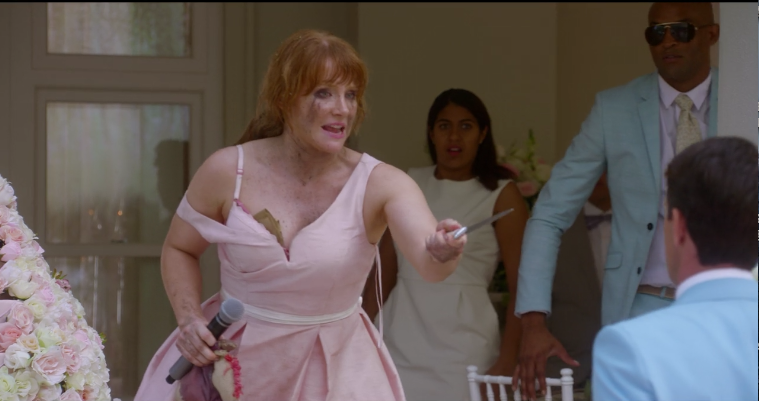
Lacie Pound is a solid 4.2. Not super high, but certainly high enough to live comfortably. However, she desires to buy a condo in a very upscale neighborhood, the quality of which requires her to be at least a 4.5. To achieve that status, she must be "up-rated" via many positive interactions with people of a higher status. So, when a girl that she went to school with (who treated her very poorly), who is a 4.8, asks Lacie to be in her wedding, Lacie knows that she hit the jackpot.


However, Lacie's trip to Naomi's wedding is what begins her downfall. Her status begins to fall because of a handful of poor encounters with strangers, and she misses her flight. Her falling status doesn't allow her to purchase a decent rental car, and the crappy older model breaks down. Her perfectly organized world is starting to fall apart, and it's spinning out of control. She finally makes it to the wedding, after trekking through the woods for several hours, and is determined to make her maid-of-honor speech. So, as a 2.8, Lacie barges in to a reception dinner of an enormous group of people above 4.5, and begins to rail on Naomi's perfect life. She sarcastically applauds her for marrying "that...JACKHOLE" and for creating such a world around her that she will never know what it's like to actually not be able to function in this society. Lacie is removed from the scene by police, and is taken into custody.


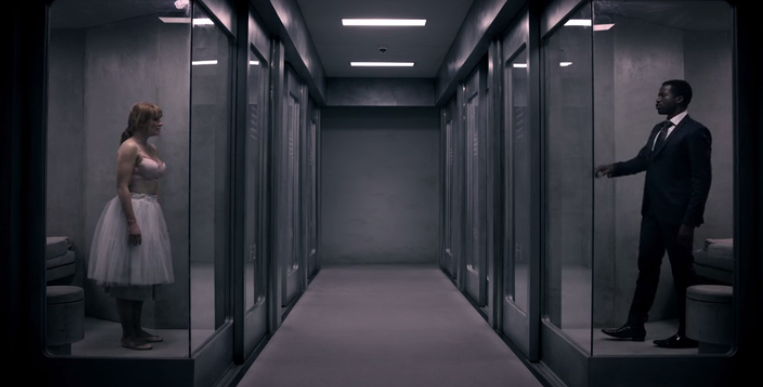
The show ends more beautifully than I could have ever imagined. While in custody, Lacie doesn't have her phone or any other kind of technology, and is isolated to a tiny cell with glass-plated doors. Across the aisle from her is another man in custody, and they begin to have a conversation. Eventually, they begin insulting each other. He doesn't like her clothes, she doesn't like his face. But it quickly evolves, and the episode ends with them screaming "FUCK YOU" at each other.


In this version of society, everyone has to be perfect all the time to achieve this desired status of perfection. They can't say what they actually think. They can't give their true opinion, and they certainly can't insult anyone. That's why the episode ends so beautifully. Lacie and her fellow detainee are screaming their actual thoughts, their actual opinions at each other, for the first time in their lives.

Rating: A

Monday, October 24, 2016

Supernatural and Mad Max: Why the "On-the-Road" Genre is Tricky

Everyone loves a good road trip. If you can't afford a road trip, the next best thing is a road trip movie, tv show or book. These pieces of media show us what it is like to literally go on a journey with someone, from the convenient comfort of our dorm room. However, the road trip genre can be a tricky beast to wrestle with, if you are aiming for something more than a cheap YA romance novel.


Robert Johnston, author of Reel Spirituality, says that the "on-the-road" genre is the best vehicle for one thing: character development. Development is more easily able to be played off of other characters in a small space, especially if it involves both the protagonist and antagonist. There are few actual events occurring, so both the creators and the audience of the film or show are better able to pour their time and effort into a character's psyche and how it may change, rather than worry about big situations that they are put in. Therefore, the road trip genre definitely serves characters, and tends to leave plot in the background.
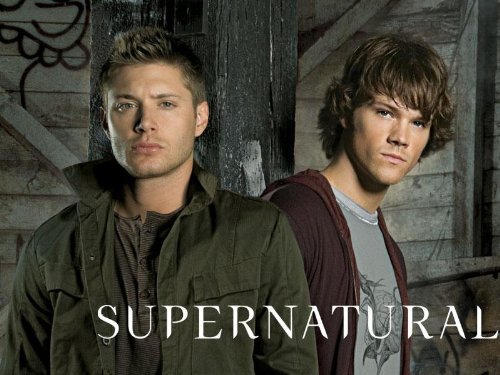
Unfortunately, leaving plot behind and focusing on character development can be tricky. Take, for example, the CW's hit show Supernatural. For those who may not be familiar with it, the show is about two brothers who travel around the country and investigate cases of supernatural occurrences. Due to the nature of the show and the fact that the brothers travel all over the nation, the show is definitely a part of the "on-the-road" genre of media, and it's plain to see. Throughout the show, the characters grow a lot. They learn to soften their hard hearts, to be open to love, and to learn what community means. So the plot should take a backseat, right?

This is where Supernatural messes up. In the first few seasons, there is no overarching storyline. Each episode had an individual plot, with small themes from other episodes carrying over. These episodes were great. They were good quality and left a lot of room for the main characters to grow. However, in the last nine or ten (yes, nine or ten) seasons of the show, the quality became lackluster. The seasons were given overarching plot lines that were more and more unreasonable, poorly written, and unappealing. Side characters were mercilessly tossed in their graves, much to the despair of the audience. And, above it all, the main characters grew and grew. The plot failed, but the character development was astounding. Why was the plot a total dud? Because of its genre. The show isn't made for the plot to be the central focus of the show. The development is, and the audience can lose sight of this development when distracted by poorly-crafted plots.


On the opposite end of the spectrum, take Mad Max: Fury Road. With a facet of the movie's many genres literally in the title, Mad Max:Fury Road is a wonderful example of strong development with little plot. It's a two-hour car ride. It's heavily saturated with violence, but the plot intentionally takes a bit of a back seat. For those who may not know, Mad Max: Fury Road is about people, in different stages of captivity, breaking free and trying to find some last shred of humanity. Throughout the course of the movie, not a whole lot happens as far as the plot is concerned. It's just life and the defense of life. But through that understated plot, enormous character development is made evident. The two main characters--Max and Furiosa--are able to let their guards down around each other, and even open up enough to tell each other their names. This development is so easy to spot because, in the middle of the movie, just about the only thing that happens is fighting and driving. And I love it.

So, be wary of the trickiness of the road trip genre. It's certainly a wonderful genre, but it's done wrong (really wrong) way too many times. So be conscious of the development, and don't be afraid to make the plot sit in the backseat. Or even stuff it in the trunk.

Thursday, October 13, 2016

"Ten-Inch Hero"--Finding an A+ Meaning in a B- Movie

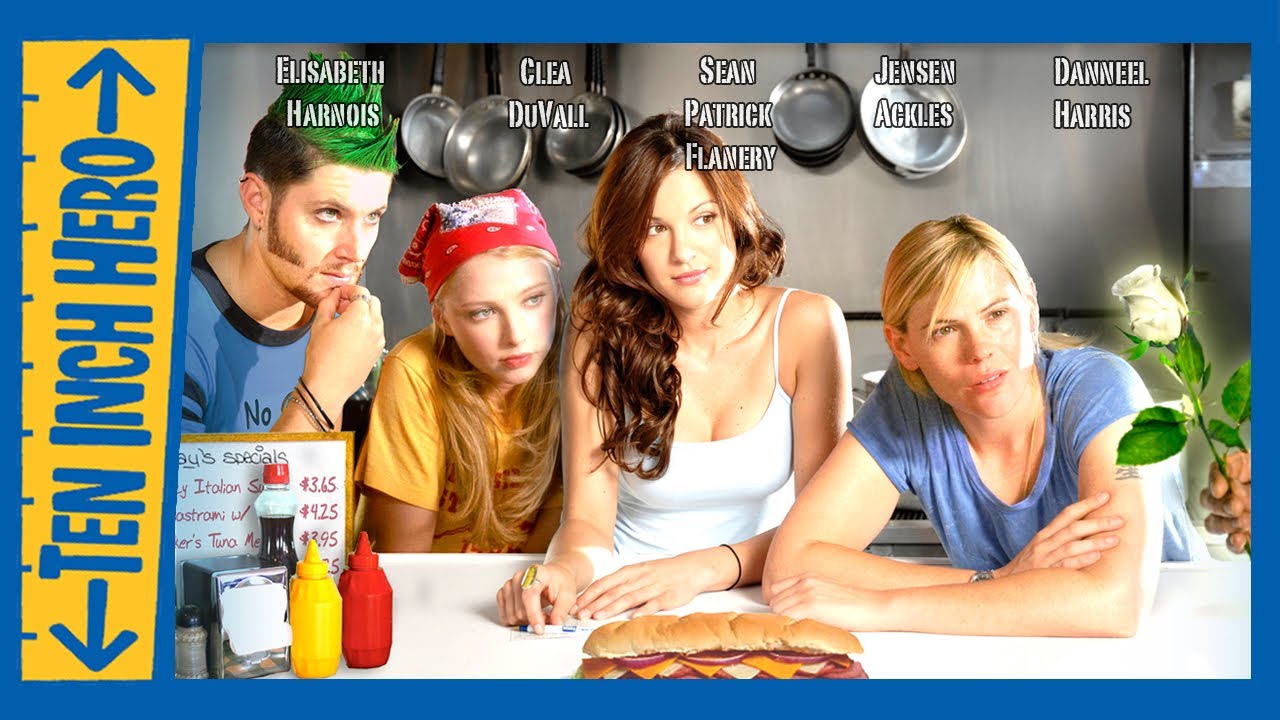
About a year ago, I watched the movie Ten-Inch Hero for the first time. The film, directed by David McKay and released in 2007, is about a young woman named Piper who, as a teenager, gave up her child for adoption. Now, as a woman in her mid-twenties, she seeks to find her daughter, and gets hired at a sandwich shop (hence the name Ten-Inch Hero) in California while looking for her daughter. At the shop she meets quite the group of interesting people: Jen, another young woman desperately seeking love; Trucker, an aged hippie who longs to find someone with his worldview; Priestly, a punk rule breaker who desires to break social norms; and Tish, a young woman who spends more time with her "dates" than at work. Every one of these characters is opinionated, strong-willed, and reliant upon themselves. However, as they come to find, they all need something more: love.


Ten-Inch Hero is certainly not the best film I have ever seen. An independent film that was shot over the course of only three weeks, it had poor production quality and wasn't even released in theaters in the United States. However, to this day, the film has gotten consistently decent ratings on Rotten Tomatoes and IMdB, averaging between 80 and 90 percent. Why? The story and characters. 

Ten-Inch Hero's story is surprisingly relatable. It is about a handful of people trying to find love and obtain closure while battling demons from their past. Piper was a very young mother who had to give up her child, and has had to live with the regret and guilt of never having met her daughter. While not every viewer has had the same experiences as Piper has had, this film makes Piper a very relatable character. Everyone has experienced some sort of guilt, regardless of its origins, and can find solace in other who have experienced the same. And then take Priestly. He does his best to hide behind his punk rocker facade to hide the fact that he is actually a sensitive, kind person. Many viewers can relate to this on some level. 


Overall, Ten-Inch Hero's story is about finding love and accepting yourself. Piper accepts that she had to give up her child and isn't going to get her back. Priestly accepts that he actually wants to reveal his feelings, and tries to become a more loving person. Tish gives up her "dating" lifestyle and decides to become monogamous with someone that she deeply cares for. While Ten-Inch Hero isn't exactly the most incredible movie ever, it really does have a very relatable story.  

Rating: A-

Monday, October 10, 2016

The Effects of Media on Children--"All About that Bass"

When I was a freshman in college, Megan Trainor quickly ascended to fame with her pop hit "All About that Bass." While I'm not a huge fan of the song in particular--or of pop music in general--it was certainly not difficult to see the impact that her music made.


 The song describes Trainor's childhood concerns about being a "plus-sized" woman and how she thought that men would think of her when she was older because of it. In the song, she tells about her mother's reassurances, saying that heavier girls are just as beautiful as girls who are thin, and that learning to accept her body will make her beautiful to everyone.

My sister Emily was eleven when this song hit the radio waves. She, like me, is heavier, and at a young age was very distraught about it, to the point where she resorted to crash dieting (at the age of 7) to try to lose weight. However, Megan Trainor's music changed her outlook. I remember sitting in the car with her, listening to "All About that Bass," and afterward discussing with my sister what we thought of the song. I told her that I didn't really like it all that much, to which she seemed offended. 

"Why are you mad that I don't like that song?" I asked her. Her response shocked me. 
"It makes me feel like I have a chance. "


Tuesday, October 4, 2016

Phineas and Ferb: Children's Media and Representation

For quite some time, one of my favorite animated children's shows has been Phineas and Ferb. The show is wonderful, hilarious, and quite fantastic, with subtle hints of reality to tug it back down to Earth.


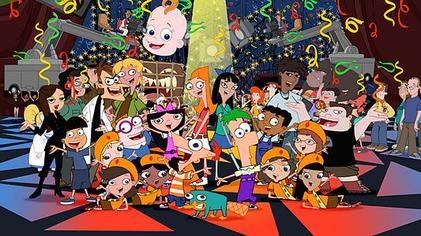
Phineas and Ferb is about two young stepbrothers of those names that work together to create wildly imaginative inventions to pass their time during the summer, occasionally accompanied by Perry, their pet platypus. These inventions, while a major highlight, are definitely not the purpose of the show. I believe that the purpose of the show is to portray accurate representation.

The show is wildly diverse, portraying characters from a variety of home situations, ethnic backgrounds and religions in a wonderful light. For example, the main family in the show is a mixed family, consisting of an American mother, sister and brother and a British father and brother. Rarely is a family like this portrayed on a kids show, and it's done with almost no negative discussion of the previous family situations.

Along with the mixed family, Phineas and Ferb have an enormously diverse friend group. Some of their closest friends are Ballet Tjinder, a young Indian boy, Isabella Garcia-Shapiro, a Hispanic girl, and Stacy Hirano, an Asian girl who is a friend of their older sister's. All of these nationalities are represented well, and relatively without stereotype. This kind of representation in children's media is wildly important, and allows children of varying nationalities to find someone that they can identify with in a show that they love.


Sunday, October 2, 2016

The Christian and LGBT+ Communities--Mark Yarhouse's Forester Lecture

This past Thursday, I attended Mark Yarhouse's Forester Lecture at College Park Church. Considered to be the leading expert on sexual and gender identity, Yarhouse discussed how the Christian community should learn to coexist with the LGBT+ community.


From my experience, these two communities have done nothing but clash. I grew up in a fairly conservative area, an area which was not very open to diversity. There was some racial and religious diversity, but it wasn't welcomed with open arms. And if even those diversities couldn't be accepted, then sexual and gender diversity certainly wasn't accepted. The students of my high school were incredibly bigoted, and my gay friends were the subjects of relentless bullying. I hoped that I would find that the "real world" after high school would be different, but found that this conservative community is actually a lot worse. The kind of discrimination that LGBT+ people face on this campus is so outrageous that many have to turn to counseling to be able to comprehend the pain they go through.

Because of this, I think that Yarhouse's lecture was absolutely necessary. He provided necessary information about sexual and gender identity for people on either side of the debate, and heavily pushed the fact that Christians need to be compassionate to people of the LGBT+ community.


Wednesday, September 28, 2016

The Secret of Kells--A Medieval Example of Christian Art


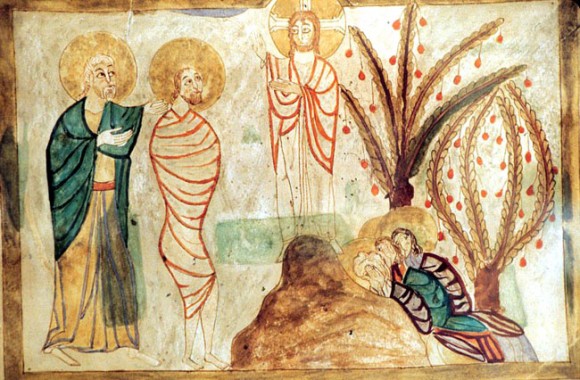
In my Faith, Film and Culture class, we recently watched the film The Secret of Kells, a 2010 Irish-made movie based on the true story of the creation of the Book of Kells. The story revolves around a young Celtic boy, Brendan, who lives with his uncle, a no-nonsense abbot, in the walled city of Kells. Brendan desperately longs for purpose and adventure outside of the city walls, but is restricted by his uncle, who demands that he stay inside the safety of Kells. However, once a famed illuminator named Aidan of Iona comes into the city claiming that Viking hoards are hot on his tail, Brendan is secretly enlisted in helping Aidan construct the Book of Kells, a book that was said to "bring light to the darkness." This book (pictured here) is a real seventh-century book, comprised of the four Gospels of the New Testament with illuminated pages.

The Secret of Kells is easily the most visually stunning film I have ever seen. Created and designed to look like an illuminated text, this film shows how literary text and visual film can be combined. Several characters of the movie were given strange features and proportions so that they would look like illustrations of people from texts. Also, the planes that the characters were placed in in the frames often had borders, making the frame appear as if it were a page from an illuminated text. I found this to be an absolutely astounding expression of art in the film.


Ultimately, this film is a strong recreation of the evil that faced the early Christians. The people of Kells are attacked--and ultimately slaughtered--by hoards of malicious Vikings that burn down everything in their path. While the people of Kells are illustrated in either bright or neutral colors, the Vikings are illustrated in colors that are dark, mysterious, and harsh. Illustrating these characters in such a way really allows the viewer to empathize with the terror that the Celtics felt when the Vikings were invading. It truly was horrifying.


Overall, The Secret of Kells is probably the best movie I've seen in a very long time. It made me chuckle, it made me think, and it also made tears stream down my face. If a movie can do all of those, I'd say that it's a success. 

Rating: A+


Monday, September 26, 2016

"Do Christians Need Art"--Art and the Denial of God

For centuries, art was a major way that the Church depicted Biblical history. From frescoes to icons to decorative tapestries to any type of art imaginable, masterpieces born out of creativity and a passion for God reached the hearts of those who wanted to come closer to God.


Time and time again, art has proven itself to be moving. In the book Reel Spirituality, author Robert Johnston quotes filmmaker Elia Kazan, saying that "film is now 'the language of [hu]mankind'".  Film touches us more deeply than the average chapel experience, formulated in such a way to tug at our heartstrings and pick at our souls. It changes us, moves us, and forms us.


So why doesn't the church use art to reach out to others anymore? The "Christian movies" being made today aren't actually pulling anybody into the church: combined with their poor writing, subpar acting, and often preachy tones, Christian movies aren't reaching out to nonbelievers. They're pushing them away. Art is absolutely necessary for Christians. I believe that art is necessary for everyone. However, Christians are not utilizing their art-making abilities to reach out to others. Instead, they are using their "art" to literally preach to the choir. 

Middletown

The Huntington Theater Department's production of the Will Eno play Middletown was absolutely stunning. I had no expectations going into it, as I had never even heard of this show before, and was definitely in for a wild ride. The show centers on three main people: Craig, Mary, and John. Craig is a nervous mechanic who turns to alcohol and pills to calm his nerves. Mary is a housewife, struggling with relocation to a new home and an absent husband. John in an anxious, lonely man who is desperately grasping for some sort of meaning. These people all try to get a handle on what it means to be alone and scared in an abusive population no one holds back and everyone speaks their mind, to the point of being terrorized. 
Watching this play was incredibly difficult. Not only were there parts of the play that were strange and kind of awkward to watch, but there were also parts that tackle big questions: What's the point? What does all of this mean? Does my existence have any kind of meaning? These questions are very significant to all of us, especially to those who desire to make art. Artists and creators often doubt themselves, and wonder if their art has any kind of meaning, or even the right kind of meaning. If it has meaning to you, then you should do it. But if it has meaning to someone else, then you have to do it. 

Thursday, September 22, 2016

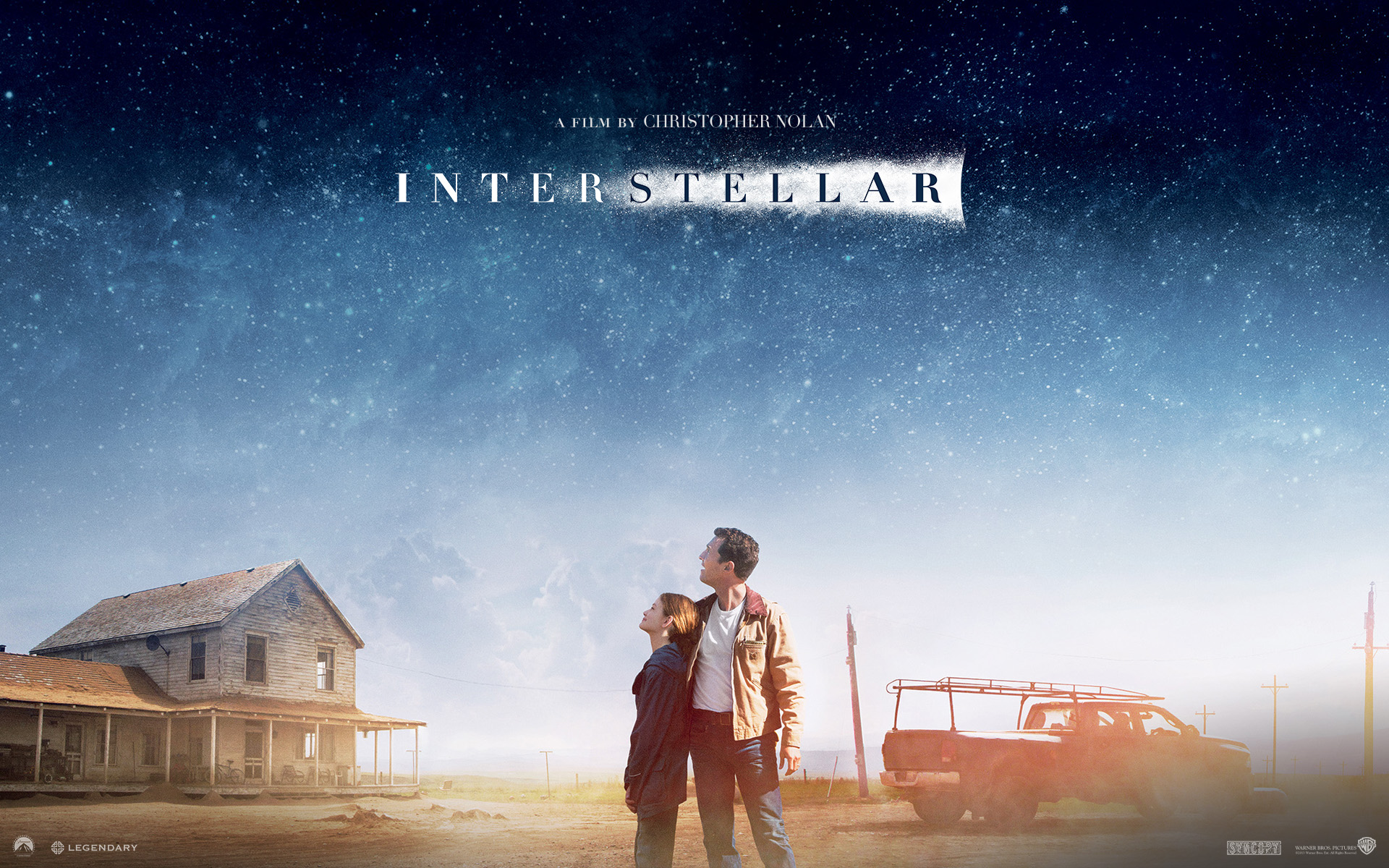
Interstellar--Using Tragic Events and Incredible Imagery to Tell a Story

The last weekend of October in my freshman year of college, I found myself sitting in the Huntington 7 with a friend from high school, gearing up to watch another Matthew McConaughey movie (or, in her words, Matthew McConahot). I did not know much of anything about Interstellar at that point, as I had seen few trailers or commercials (dorm life doesn't often include a lot of satellite television) and had not done any kind of research beforehand. Little did I know that this movie would literally change my life. 
While watching this insane, incredible movie, I was absolutely entranced by the combination of the events and the images before me. The combination of the two was purely overwhelming, and my poor brain couldn't wrap itself around what I saw the first time. So I saw it again. And again. And again. And then maybe another time. Every single time, I was amazed more, cried more, and was in shock at the beauty of this film. Although probably not labeled an actual tragedy, the lives that the characters lived, the lives that were cut short, and the pain experienced by the most brave men and women in the entire world was absolutely devastating to me. The movie was created in such a way that it was difficult not to feel their pain. You couldn't watch the film and not cry at the deaths of wonderful (and some horrible) characters, characters being forced to leave their families, and at the hope and joy upon the reunion that some of these characters experienced. Some of these events, although not necessarily in a tragedy, were downright tragic to me. 
Along with a story line that I will never forget, the film (created by the notorious Nolan brothers) completely baffled me in terms of visual effects. With most movies, even if it has the most incredible plot, amazing characters, and incredible writing, its can be hard to get past bad visual effects and poorly executed visuals. However, Interstellar connected every possible element in terms of what I was seeing: setting, set design, visual design, et cetera. I was blown away by the images shown me. 
No other movie has affected me as deeply as Interstellar did the first time I saw it, or the most recent (honestly, probably the 20th) time. The combination of tragic events and unbelievable imagery combine to tell an amazing story, in which no single quality of a film takes precedent over the other. 

Wednesday, September 21, 2016

The Christian in a Changing World--A Religious Minority?


Buckle up, because this is going to be a fairly liberal post. 

It is true that the world around us is changing rapidly. And while I do agree with what some of what the author of "The Christian in a Changing World" says, I don't know if Christianity is as small of a minority as Hans Rookmaaker makes it out to be. According to NPR's website, there are currently 2.2 billion Christians in the entire world, making it the most populous religion in the current world. However, it is likely that Christianity as a religion is declining in popularity in America, for which I personally believe there are several reasons, all branching from one general idea:

Intolerance. I can't even name or number all of the different intolerances that I have personally experienced, most in a conservative Christian community. As some of you may have noticed, in such communities persons who don't fit inside the "perfect Christian" stereotype aren't always treated with the warmest welcome (See student handbook for details). For example, I have received many a lewd comment from members of the "Christian" community about my appearance and what it "makes me look like" because the majority of my hair is one quarter of an inch long, and used to be bright red. In this community, short hair on women has a pretty negative connotation, especially if it's "exotic" colors.

So, based off of that, we can take the supposedly negative assumption about my short hair and determine that people of the LGBT+ community (or people who seem to fit an LGBT+ stereotype) are not always held in the highest regards in any Christian community. For example, a friend of mine from high school was exorcised by his pastor because his pastor thought that he could "remove his homosexual demons" and "purify his unclean soul." In the end, all he did was inspire the removal of my friend's family from Christianity and caused severe psychological distress. They now refuse to set foot in a church.

Another type of intolerance that I have witnessed from Christian communities is religious intolerance. While I was raised Methodist, I have extended family members of several religions and sects of religions: I have cousins who are Muslim, cousins who are Mormon, and several family members who are Catholic. My Muslim cousins have never had an issue with the other cousins. However, the family members whose religions are based on Christianity love to raise hell at family gatherings about the fact that my dad's (formerly agnostic) cousin converted to Islam upon marrying his Middle Eastern wife. It's a mess.

I could go on (and on and on and on), but overall my message is this: I don't believe that Christians should be surprised that popularity in our religion in America is declining. The fact that strict Christianity does everything it can to exclude the "outsiders" and include only rich white people doesn't allow for a huge demographic of believers. Jesus hung out with the outsiders that nobody liked: the tax collectors, lowly fishermen, and those excluded from society because of illness. Who would that be today? Today, it would be people of racial minorities, the disabled, those in the LGBT+ community, IRS agents, etc. So why aren't we extending the hand of love and acceptance to these people?


Sunday, September 18, 2016

SOAP: The Perfect Storm of Comedy and Tragedy

Two summers ago, I became absolutely hooked on an sitcom called Soap. Airing from the late seventies to the early eighties, the show was a genius satire of the ridiculous soap operas that were airing at the time: it mocked the crazy plot lines, wacky characters, and general cheese factor involved with most of those soap operas.


However, Soap was more than just fluff mockery. While it is certainly a satire, it was also groundbreaking for its time. The show's plot revolved around two families, one rich and one working class. Almost every character had some kind of secret that hindered their daily lives: One was cheating on his wife with everything that breathed, one was the other woman in an illicit sexual relationship with a congressman, one had accidentally killed his wife's first husband, one was a convicted murderer, and so on and so forth. The show was even so groundbreaking at to have TV's first openly gay character (played by Billy Crystal), as well as a black character who wasn't afraid to speak his mind. These characters were all incredibly controversial, and all dealing with some sort of pain or distress in their lives.


As a comedic satire, the show is absolutely hilarious. The characters all have serious issues, but deal with them in ways that certainly bring laughter to the audience. However, the show really does know how to sober up. Characters dealt with loss, issues of trust, regret, guilt; each of these were portrayed in a serious way around all of the hilarious nonsense that also occurred. The show was a wonderful balance between comedy and tragedy.


Wednesday, September 14, 2016

Whoops

Also, sorry about those pictures on my last post. Some crazy formatting nonsense that didn't appear on my screen at all.

Follow Your Dreams--Literally

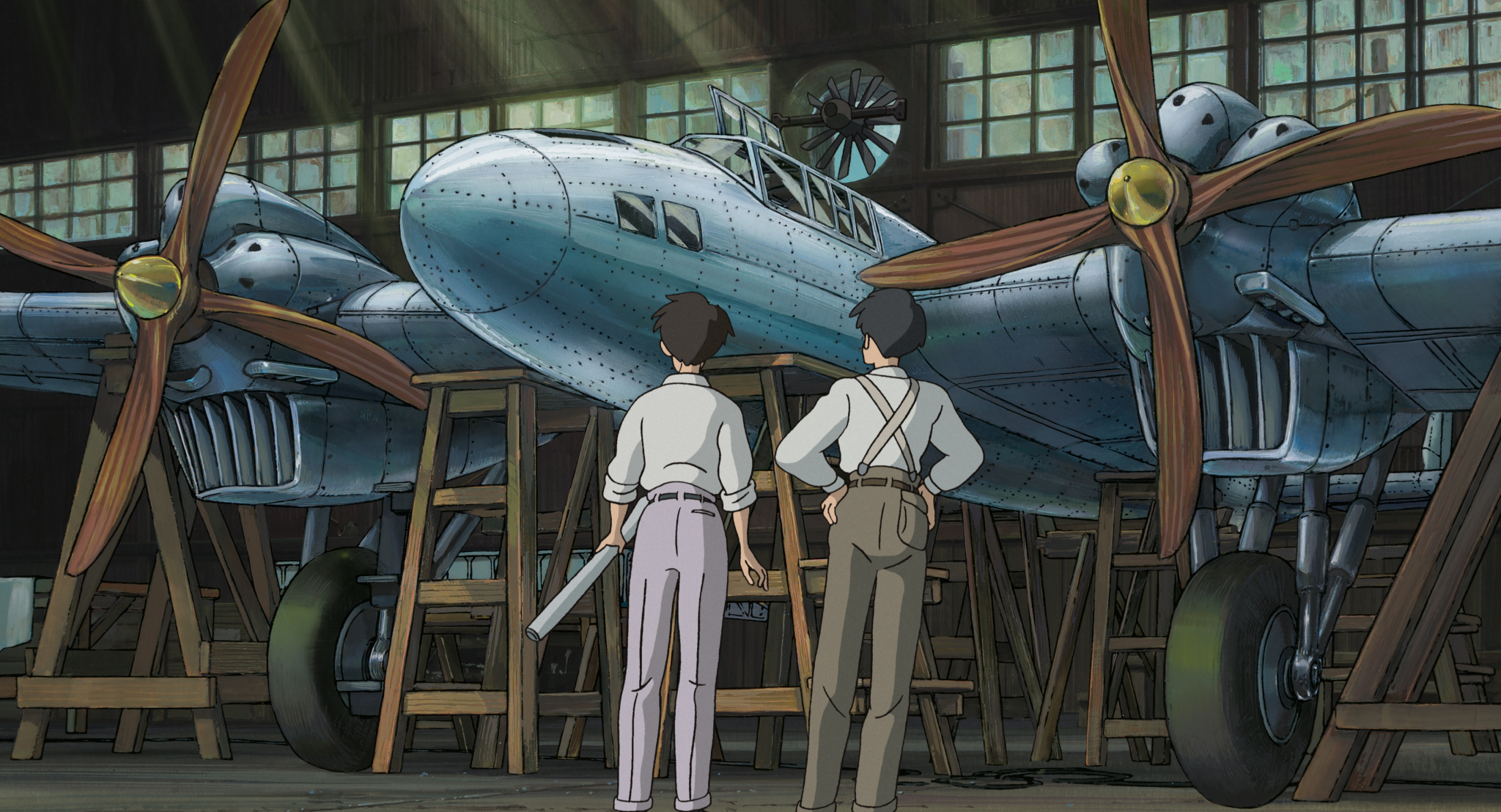
Yesterday in my Faith, Film and Culture class, we watched the Miyazaki film The Wind Rises. I didn't really have any expectations going into the film, as it was the first Miyazaki film that I had ever seen. Well, if I'd had any expectations, this incredible animated masterpiece certainly would have far surpassed them.


This animated historical biopic follows Jiro Horikoshi, a young Japanese boy who desperately wants to be a pilot, but can't because of his poor eyesight. In his dreams he is met by Caproni, a famed Italian aeronautical engineer, who encourages him to follow his dreams--literally--and use the events of his subconscious to help him design airplanes. The story follows Jiro as he grows up, attends university, and becomes the paramount aeronautical engineer for Japanese fighter plane design in World War II. The story is delightfully obscure, and follows the life and events of a person who, outside of Japan, not very many people have probably heard of. The story is beautifully told, wildly imaginative, and really captures the heart of its audience. 


A good portion of the movie takes place in Jiro's dreams and imagination, a place where he can very easily design planes and map out their potential flaws. This, for the third or forth post, can be connected to Lewis' idea of "the image." For someone working in creative and technical design, such as Jiro, having this kind of imagination and ability to mentally map out his work is absolutely necessary, and I think that this applies to all of us. 

Overall rating for the movie: A