
Showing posts with label Quiz2. Show all posts
Showing posts with label Quiz2. Show all posts
Friday, December 9, 2016
Quiz 2
Storytelling and characterization is crucial to a good film. Co Hoedeman's Tchou Tchou does both of those key elements in a piece of attention-grabbing media without any words spoken. The playful boy and girl go from happy-go-lucky children to unlikely heroes of the block world by using their creativity to solve problems. As stated, the children are playful and creative, as well as very close to each other. The dragon-snake-thing has very little personality, but it is definitely the classic children's story villain by adopting the archetype and having a taste for destruction. The critters that can be seen flying and crawling around aren't the most important, but they provide extra interest in the action on screen and make the scene more natural. The failed attempts of running and hiding from the dragon only lead up to the morphing of the beast into an adorable reptilian train. Moral of the story is that creativity is a good assistant in problem solving and, as every creator knows, in storytelling.


Tuesday, November 8, 2016
Tchou Tchou and "Changing Television": Quiz #2
For this quiz, I will connect Co Hoedeman's Tchou Tchou and the reading "Changing Television: Why the Right Does it Wrong" by Kim Hayes and Peggy Charren. In this reading by Hayes and Charren, they discuss the fact that the content of children's TV should be appropriate for their age, not watered-down adult content. I think that Hoedeman tackles this idea really well in Tchou Tchou. This short film is about a young boy and girl who are constructing a city made out of wooden blocks. Then, a serpentine dragon comes along and destroys the city. After the serpent leaves, the boy and girl reconstruct their city, not even discouraged at the destruction.

This story is certainly supposed to parallel the Creation story. It is about a male and female that are building their own city, their own Eden. It is also about the challenges that they face--the serpent--along the way. This short film does a wonderful job of portraying the Creation story to children. Granted, it does not exactly show the Fall of Man, it paints a picture of what human resilience can look like against secular struggles.
Hoedeman's Tchou Tchou works together with Hayes' and Charren's article because it takes a very serious and pretty heavy story--the Fall--and reframes it in terms that children can understand. The content is appropriate for children, and is portrayed in such a way that, if they don't even know the actual story, they may be able to have an idea of the importance of Creation.
This story is certainly supposed to parallel the Creation story. It is about a male and female that are building their own city, their own Eden. It is also about the challenges that they face--the serpent--along the way. This short film does a wonderful job of portraying the Creation story to children. Granted, it does not exactly show the Fall of Man, it paints a picture of what human resilience can look like against secular struggles.
Hoedeman's Tchou Tchou works together with Hayes' and Charren's article because it takes a very serious and pretty heavy story--the Fall--and reframes it in terms that children can understand. The content is appropriate for children, and is portrayed in such a way that, if they don't even know the actual story, they may be able to have an idea of the importance of Creation.
Monday, November 7, 2016
Games in Industry and Life
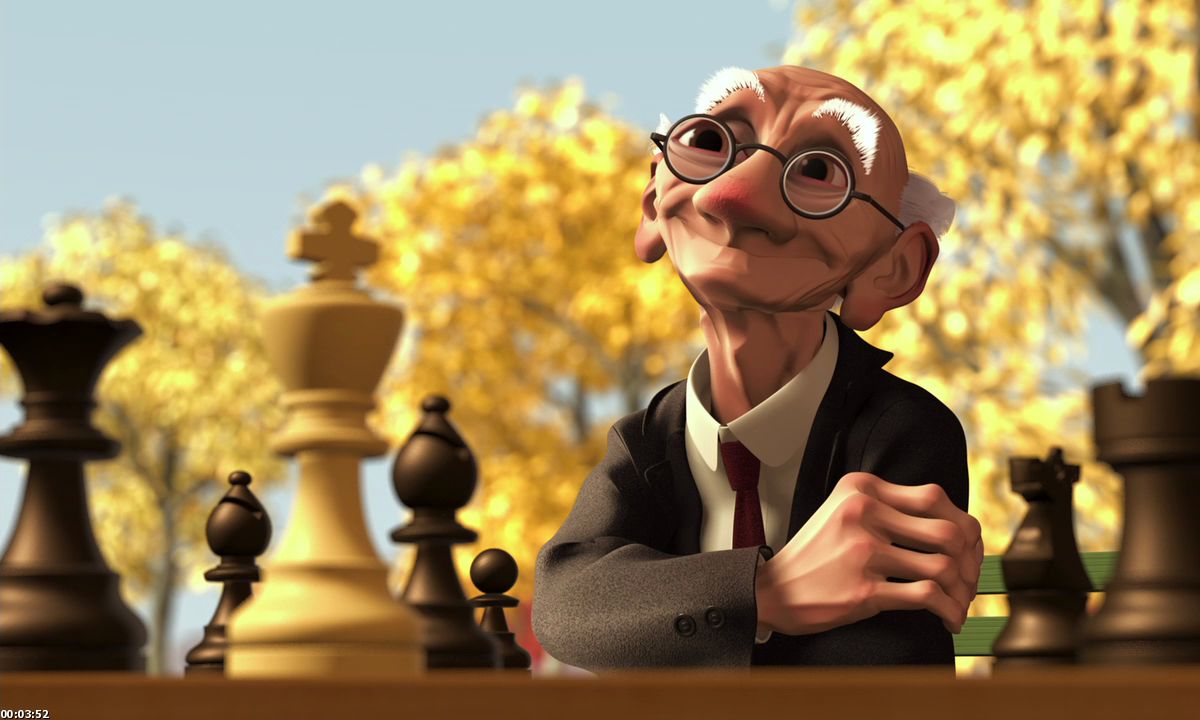
"Geri's Game" is one of the most creative of Pixar's 17 theatrically released shorts. From the time I was a child that one stood out to me the most as far as the story of it went. It had no words, of course up until that point none of the shorts did, but this one stood out to me as one of the most creative. Which reflecting on the Article, "The Secret of Pixar Storytelling," the team at Pixar did just that. The article states that, "The process of storytelling is messy," and I 100% agree with that. Storytelling is extremely difficult, and when one story is presented to three different directors, you will wind up with three different movies.
Toy Story took a total of 36 months to write, while Toy Story 2 from a character aspect, only took 3 months. The article here doesn't quite take into account the fact that John Lasseter had to single handedly take over the project right off of coming out of the "A Bug's Life" tour, but aside from that, the second story plot is always easier when you have characters to work with. I myself am a comic book writer and artist, and when I first wrote my very first issue, it took me 20 months to write. The second issue only took me 4.
To summarize, "Geri's Game" is the best example of the Pixar artists attempting to keep away from the Uncanny Valley while actually attempting, and improving, models for humans. Compared to their fourth short "Tin Toy," and even their third short, "Red's Dream," they were testing their abilities of getting human characters correct, and were getting better each time.
Toy Story took a total of 36 months to write, while Toy Story 2 from a character aspect, only took 3 months. The article here doesn't quite take into account the fact that John Lasseter had to single handedly take over the project right off of coming out of the "A Bug's Life" tour, but aside from that, the second story plot is always easier when you have characters to work with. I myself am a comic book writer and artist, and when I first wrote my very first issue, it took me 20 months to write. The second issue only took me 4.
To summarize, "Geri's Game" is the best example of the Pixar artists attempting to keep away from the Uncanny Valley while actually attempting, and improving, models for humans. Compared to their fourth short "Tin Toy," and even their third short, "Red's Dream," they were testing their abilities of getting human characters correct, and were getting better each time.
For the Birds
Andrew Stanton says, “It’s not the story that’s important,
it’s how you tell it.” I find this quote
perfectly displayed in Pixar’s short, “For the Birds”. It’s important to avoid telling the same
story over and over again because that devalues the original meaning. This short puts a new and comical twist on
the idea of exclusion or bullying. Pixar
told the same story most cartoons tell, but they accomplished this without a
single word or even a human being. They
advertised the importance of being unique in the end, and not necessarily like
everyone else. Most bullying stories
will end with finally being included or popular, but this one celebrated the
idea of being confidently independent.
It’s not about the moral, but finding a new point of view and expressing
that in a different way.
Stanton
also explains that animation should be interpretive, not realistic. Unless the moral behind this short is to stop
bird bullying, then it also accomplishes Stanton’s quote regarding
interpretation. I think every child, at
some point or another, has been amazed by birds. It may be their feathers, or their vibrant
colors, or just because they can fly, that children are drawn to birds. Pixar took advantage of child-like wonder to
interpret their message to their audience.
“For the Birds” portrays the
significance of discovering new ways to tell stories and the importance of
using effective interpreters.
Storytelling is valuable to me and I think Pixar does a great job of
telling them in creative ways.


Sunday, November 6, 2016
For the Birds: Reading Quiz 2

For the Birds is a genius film created by Pixar. and it even covers an important issue in society today. This films concerns bullying and the effects that bullying can lead to. The big bird has the best intentions throughout the entire film. He just wants to fit in and be friendly to the little birds. Of course he was different from them, but the little birds should have been accepting of the big bird. Instead, the little birds bond with each other by mocking the big bird, and the big bird is still oblivious to their actions. They continue by intending on hurting him, by making him fall to the ground. Little do they know, karma is a major bitch. They are actually the ones get embarrassed in the end, which shows that what goes around definitely comes around. The reading on Pixar discusses the importance of storytelling. It reads, "It's in the telling of a tale that the emotional appeal takes hold. As with a good joke, the essence of its humor will always elicit a chuckle, but in telling it masterfully, the audience can't help but guffaw." We have all been exposed to many videos, movies, or short films in our lives that have tried to discuss the issue of bullying. The point may get across throughout the film, but if the story is not told in an effective way, nobody will learn anything. "For the Birds" actually keeps the audience's attention until the very end. Even little kids can take something from the film. They are being exposed to a big issue in an entertaining way, so it is clearly evident that the storytelling is all that really matters. Another interesting quote from the reading says, "Animation should be interpretive, not realistic." There was not one actual word in this film, and those birds' actions and thoughts are not realistic. This film was easy to interpret and it was fun to interpret, so this animation was clearly a success.
Pixar Shorts
In a recent lecture, I learned that the animated shorts created by Pixar were actually tests. Computer animation was brand new, so rather than flopping on the big screen with a major movie budget, they created little five minute shorts to experiment difference scenarios. I never thought that before but it makes sense. As examples, "For the Birds" taught the animators texture with fluffy creatures. The next, Monsters, Inc. hit the theaters.

I really got into the shorts in 2006 with the release of Cars. The movie came with a short called "One Man Band." The short consists to one-man bands competing to get a little girl's money. I believe it taught the animators rapid movement in a small space. The next year, we watch that quick movement in small spaces take place with the cooks of Ratatouille.

With Ratatouille came the short, "Lifted," a funny alien abduction film. It taught the animators scale, especially involving VERY large objects. The next year, we meet WALL-E for the first time.
The recent film Inside Out came with a musical short Lava. I believe it taught how to work with ever changing volcanoes because Moana contains a battle with spirit who lives inside a volcano.


I really got into the shorts in 2006 with the release of Cars. The movie came with a short called "One Man Band." The short consists to one-man bands competing to get a little girl's money. I believe it taught the animators rapid movement in a small space. The next year, we watch that quick movement in small spaces take place with the cooks of Ratatouille.

With Ratatouille came the short, "Lifted," a funny alien abduction film. It taught the animators scale, especially involving VERY large objects. The next year, we meet WALL-E for the first time.
The recent film Inside Out came with a musical short Lava. I believe it taught how to work with ever changing volcanoes because Moana contains a battle with spirit who lives inside a volcano.

It's really great how far we've from since 1989, with Andre and Wally B., and we continue to create amazing films, like Toy Story, Finding Nemo, The Incredibles, WALL-E, Up, and Brave.
Saturday, November 5, 2016
For the Birds- Reading Quiz 2
For the Birds was a short Pixar film that came out in 2000. It was directed by Ralph Eggleston. This film is very humorous and would be very engaging to young kids. This film depicts a message that young kids can pick up on in that picking on people usually comes back to bite you in the long run. In the film the big bird is sitting on the telephone pole while all the little birds are spaced out on the electrical wires chirping away and having fun. The big bird decides he wants to join in with the little birds so he flies over and lands in the middle of all the little birds. I wire is now drooping towards the ground and all the little birds are scrunched together and they don't like it. So they start getting mad and pecking at the big birds feet until he is hanging upside down and finally lets go of the wire. Picking on the big bird came back to haunt those little birds because when he let go of the wire all the little birds went sailing into the air and lost all of their feathers. In the end the big bird got the final laugh when all the little birds came falling back down to the ground naked with no feathers on them. The part of film that impressed me the most was the outstanding job they did on the animation of the feathers!


Geri's Game- Quiz 2
In the reading for this week, The Secret of Pixar Storytelling, it
says that the real secret to success is not in the story, but in the
storytelling. “The ability to captivate and entertain has less to do with the
words on a page, or the beats of a story, as with the performance itself”
(Singer). Many times creating such films simply involves experimenting. This
means that people need to think outside of the box and be different when
creating Pixar films. I really enjoyed watching the short films in class on
Thursday. Even though many of them did not involve any words, the films kept my
attention the entire time. My favorite Pixar film that we watched on Thursday
was Geri’s Game. This film was engaging and humorous and kept my attention the
entire time. It told the story of a man who played chess against himself. The
short film showed how Geri would physically move to play chess, and how he had
different personalities when doing so. The end also had a twist because just
when you thought he was going to win as the black chess player, Geri flipped
the board and the white team won.

Thursday, November 3, 2016
Colorforms - Quiz2
I didn't get to post on this film earlier, so I'm going to now. Colorforms may seem more like a film about children than a film for children, but the director certainly meant it to connect to children, or at least an adult's inner child. Every child has had experiences like the girl in the film. I remember finger painting and making messes when I was little, and some of my crayon artwork is still on the walls back home.


There's a great quote from C.S. Lewis in the reading that applies to making media for children or raising children: "When I became a man I put away childish thing, including the fear of childishness and the desire to be very grown up." The problem is that many adults don't grow out of that fear of childishness. Kids are kids. Parents shouldn't be shocked when their kids make a mess or don't do exactly as they're told. When filmmakers produce children's media, they need to adapt the attitude of the grandfather, meeting children where they are instead of talking down to them. They're gonna have to get a little childish and get down and dirty with the finger paint.
Brent Hardy-Quiz 2
The movie I am doing is Feather Tale by Michele Corneye. This film showed a woman being used and manipulated by a man he touched her like she was just an object. He also took advantage of her humble insecure nature. This was a great depiction because the man in the film plucked her feathers which is an amazing metaphor for peeling off the layers of a woman's soul and body by objectifying her and using her. Which ties in perfect with the reading that takes about a time when feminism and woman started to get a place in normal society or in other words a mans world. That time was the seventies and eighties where a woman would give you something and it would just get laughed away. So you know they were fighting an up hill and still are today because of our ingrained stereotypes. The reading talked about woman in the animation industry and how they were never ready to take on the tasks that men had been doing for years. There was a consent that this was a problem and that the patriarchal and misogynistic attitude has went on way too long. In response most woman only really got "curtesy" not necessarily a serious position. So while we still have come a ways woman have a long way to go, we do have still have woman like Carole Holliday. She is not only a woman but she is a black woman who has work on anything from The Little Mermaid to the Prince of Egypt. Woman have come quite a ways but they still have a long way to go.


Co Hoedeman and the Fools Errand
When it come to breakthrough animation like this, I believe that Hoedeman pioneered a style that was wonderful and awfully creative. When reading about the Fools Errand and how to replicate Pixar, Hoedeman came to mind for many reasons. Artists should not strive to be something that already exists, rather they should find their own style and technique and that is when it becomes excellent. Hoedeman came out with a style of animation that was his own that he enjoyed and through that he was able to project his creativity and enjoy doing it. If we aspire to be a replica of something, then we will never be able to reach our full potential. Hoedeman in that was is inspiring because of his commitment to the deep art that is animation. I think that the Fools Errand can be applied to life also, especially when it comes to art. Everyone wants to aspire to be like something, but it is only those who aspire to be the best that they can be who will be respected. In life we have to make our own path, through many different mediums. The truly best in our world are those who strive to be the best within the selves and not let others determine who we are.

Storytellers

One thing that Pixar pushes above everything else is storytelling. By telling a good story you can bypass some less than perfect graphics, or maybe something that looks outdated, because you can get the audience to relate to your characters on an emotional level. This is something that Pixar excels at. We watched a short today where the only character was an old man named Geri. The environment was rather minimal, the plot was simple, and the character design was exaggerated. Geri’s nose and ears are comically large. But through that the creators of the short were able to connect with us. They showed an old man in the park playing chess with himself, and exhibiting two distinct personalities for each side, eventually outsmarting himself.
Subscribe to:
Posts (Atom)